
The Rose, the Pomegranate, and Royal Identity
The Constant PrincessThis thread follows the emblems and names through which Catalina turns dynastic symbolism into a personal and political identity.
increasing Bearing strength in each event
 decreasing
Bearing strength in each eventdecreasingSpain’s Pomegranate
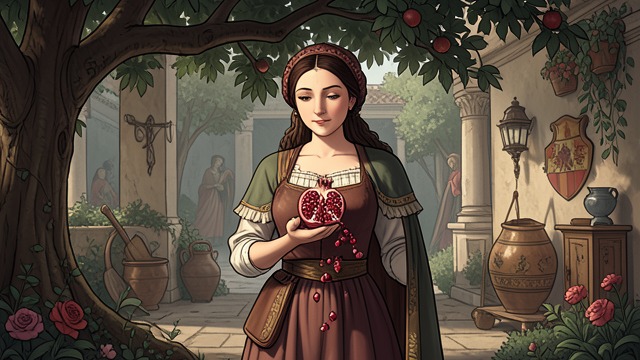
An Emblem of Inheritance
Fruit and dynasty
Catalina associates herself with the pomegranate, a Spanish emblem full of seeds and life. It links her body and future children to her family’s realm.
A promise of continuity
The emblem carries a political expectation: she will join two dynasties and bear heirs. It makes private fertility a public sign.
The Tudor Rose

Two Houses Joined
A public image
The Tudor rose and the Spanish princess are presented as a union that can secure peace and inheritance. The wedding spectacle makes the alliance visible to the people.
A fragile promise
Behind the emblem lie contested claims, unpaid dowry, and the death of Edward Plantagenet. The image of harmony conceals political risk.
A New Name at the Crown

Catalina Becomes Katherine
An English identity
At her coronation, Catalina accepts the name Katherine and the role of English queen. The change marks political belonging without erasing her Spanish past.
A moment of recognition
She sees Henry rather than Arthur beside her. The public crown brings fulfillment and private loss together.
The Pomegranate in Pregnancy

Fertility as State Symbol
Hope embodied
Katherine’s pregnancies make the pomegranate’s promise of life politically urgent. Court celebrations treat each possible heir as a guarantee of national stability.
Grief beneath the emblem
Miscarriage and the infant’s death expose how little symbolism can control. The emblem remains meaningful, but it cannot prevent loss.
The Queen’s Own Emblem

Symbols Earned by Action
A sovereign’s sign
Katherine rides beneath royal standards and represents the king in the field. Her emblem is no longer only a marriage token.
Authority made visible
The people’s acclamation recognizes her own work. The pomegranate now stands beside military achievement and a queen’s independent judgment.
1492, after the conquest of Granada
14 November 1501, at the London wedding
June 1509, at the coronation
1510–1511, during Katherine’s pregnancies
1513, after Katherine’s victory at Flodden
